
Professional Identity for Physicians-in-Training: Start Now, Not Later
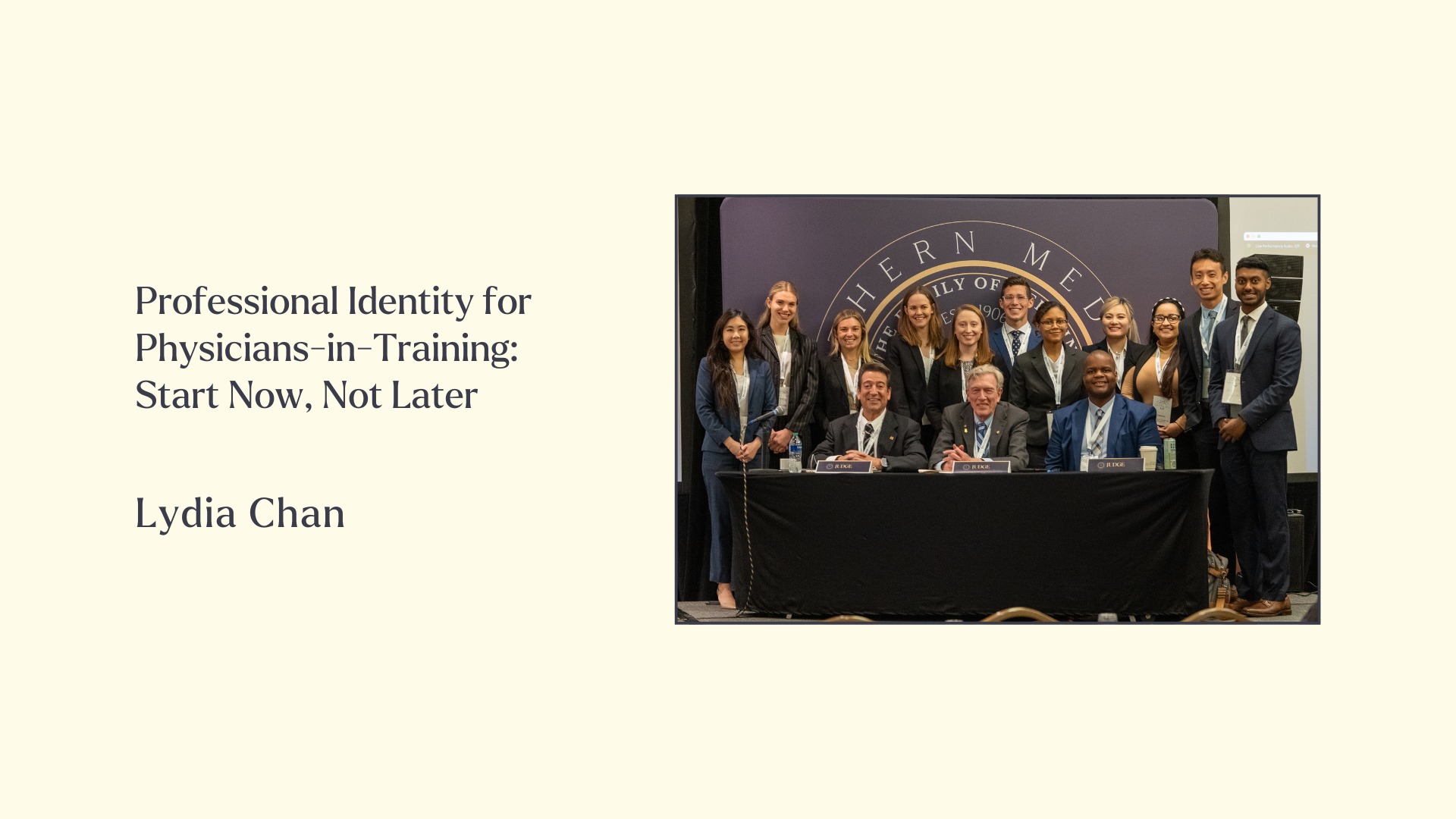
Physicians-in-training — medical students, residents, and fellows — begin forming their professional identities long before they sign their first attending contract. From the first day of anatomy lab or intern year, how you show up, communicate, and contribute is shaping how others perceive you.
Too often, trainees treat professional identity as something to refine “once I’m an attending.” In reality, it’s already forming — and it’s influencing opportunities in real time.
What This Means for You
- Your professional identity affects residency match and fellowship competitiveness.
- Faculty are forming durable impressions based on small, repeated behaviors.
- Mentorship and research invitations often go to trainees perceived as reliable and clear about their interests.
- Future patients and peers increasingly look you up online.
- The early years compound. What you build now becomes your foundation.
Professional identity isn’t branding in the superficial sense. It’s the pattern of trust others associate with your name.
Why Early Professional Identity Matters More Than You Think
1. Residency and Fellowship Applications
Program directors look beyond scores. They notice consistency: Are you known as dependable? Curious? Organized? Collegial? Letters of recommendation reflect how mentors experience you over time, not how you describe yourself in a personal statement.
2. Mentor Relationships
Faculty invest in trainees who demonstrate ownership and follow-through. When your interests are clear — and your behavior aligns with them — mentors can advocate for you more effectively.
3. Reputation Among Peers
Medicine is small. Word travels. Being known as someone who prepares thoroughly, responds promptly, and treats staff respectfully builds a quiet but powerful reputation.
4. Long-Term Patient and Professional Trust
As digital footprints expand, patients and collaborators will see your publications, profiles, and affiliations. A coherent, polished presence communicates credibility.
The Quiet Habits That Shape Perception
Professional identity is built less through grand gestures and more through repetition.
- Showing up prepared for rounds — consistently.
- Replying to emails within a reasonable timeframe.
- Introducing yourself clearly and confidently.
- Owning mistakes and closing loops.
- Being respectful to nurses, techs, and administrative staff.
- Following through on small research tasks without reminders.
These micro-behaviors accumulate. Over months and years, they become your narrative.
Involvement Beyond the Hospital Walls
Joining and actively participating in professional associations — even as a student or intern — signals long-term commitment to your field.
Attending conferences, presenting posters, or volunteering on committees:
- Expand your network early.
- Associate your name with your specialty community.
- Exposes you to leaders and mentors outside your institution.
- Strengthens your CV in ways that feel organic rather than rushed.
Professional identity is partly relational. People remember faces and contributions.
A Practical Checklist for Building Early Professional Identity
Use this as a recurring self-audit every 6–12 months:
- Clarify your emerging interests. Can you describe them in one sentence?
- Align activities with that interest. Research, electives, committee work, etc.
- Request feedback intentionally. Ask attendees how you’re perceived.
- Update your professional profiles. LinkedIn, Doximity, institutional page, etc.
- Standardize your bio. Keep a short, polished version ready.
- Track accomplishments. Posters, publications, leadership roles.
- Seek visible contributions. Present, moderate, teach.
Consistency matters more than volume.
The Digital Layer of Professional Identity
Here’s an uncomfortable truth: many trainees neglect the visual and online components of their professional presence.
Professional headshots are expensive. Scheduling time for updated photos during medical school, residency, and fellowship can feel impractical. As a result, trainees often end up with outdated images. That visual inconsistency quietly undermines an otherwise strong professional profile.
In recent years, tools like Adobe’s AI portrait creator have become a surprisingly practical option. These tools allow physicians-in-training to generate polished, stylized professional portraits from a favorite existing photo. For trainees navigating frequent transitions — white coat ceremony, intern year, fellowship — this can help maintain a consistent, current visual identity without scheduling a new headshot annually.
Your visual presence doesn’t need to be elaborate. It just needs to be current, professional, and consistent.
How Professional Platforms Differ (and Why It Matters)
| Platform | Primary Audience | What to Prioritize |
|
|
Broad professional network |
Clear specialty interests, leadership roles |
Doximity |
Physicians |
Training details, publications, affiliations |
Journal Pages |
Academic peers |
Accurate credentials, updated headshot |
Conferences |
Specialty community |
Consistent bio and photo across materials |
Think of coherence, not perfection.
Frequently Asked Questions
When should I start thinking about professional identity?
From the first year of medical school. Your patterns begin forming immediately.
Is this just personal branding?
No. It’s about professional trust, clarity of interests, and reliability — not marketing.
What if I don’t know my specialty yet?
Focus on transferable traits: work ethic, teamwork, intellectual curiosity.
Do social media posts matter?
Yes. Assume future colleagues and patients may see them. Professional tone is wise.
Is it too early as a first-year resident?
It’s the ideal time. Residency is when your habits solidify and your network expands.
A Resource for Professional Development
If you’re looking for structured guidance on leadership, mentorship, and long-term career planning in medicine, the Association of American Medical Colleges (AAMC) offers extensive professional development resources for medical students and residents. Their Careers in Medicine (CiM) program provides tools for specialty exploration, career decision-making, and professional growth.
Using formal career-planning tools alongside your daily clinical work can help you move from simply completing training milestones to intentionally shaping your professional trajectory.
Foundation, Not Checklist
Medical training can feel like a sequence of boxes to check: exams, rotations, research, interviews. But professional identity is not another task. It’s the throughline connecting them. By the time you reach attending years, your reputation shouldn’t be something you’re constructing from scratch — it should be something you’ve been building all along.
As a healthcare professional, Janice Russell knows the importance of balance in life. While her days are filled with overcoming challenges in the healthcare industry, she believes the only way to survive parenthood while taking care of the sick is to find the humor in it. She created Parenting Disasters so that parents would have a go-to resource whenever they needed inspiration.
